


As a supplier of absorbable sutures, I often encounter questions from medical professionals and researchers about the biodegradability of these essential surgical tools. In this blog post, I aim to provide a comprehensive and scientific overview of whether absorbable sutures are biodegradable, exploring the materials, mechanisms, and factors involved.
What are Absorbable Sutures?
Absorbable sutures are used in surgical procedures to close wounds and hold tissues together. Unlike non - absorbable sutures, which need to be removed after a certain period, absorbable sutures are designed to break down and be absorbed by the body over time. This eliminates the need for suture removal, reducing patient discomfort and the risk of infection associated with the removal process.
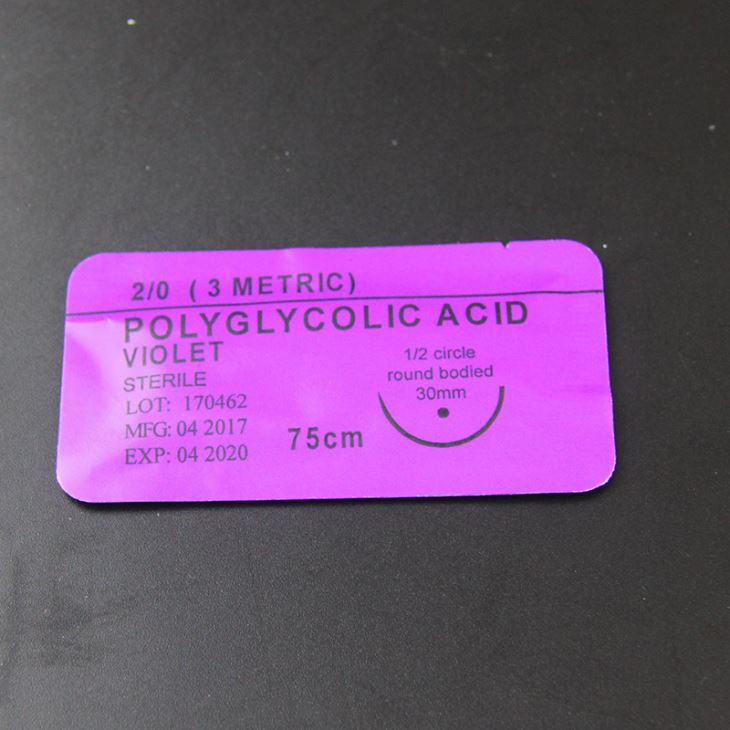
There are several types of absorbable sutures available on the market, each with its own unique properties and applications. Two of the most common types are Polyglactin Suture and Polyglycolic Acid Suture. Polyglactin sutures are made from a copolymer of glycolide and lactide, while polyglycolic acid sutures are composed of homopolymers of glycolic acid. Another well - known type is the Vicryl Suture, which is a type of polyglactin suture.
Biodegradability of Absorbable Sutures
The short answer is yes, absorbable sutures are biodegradable. Biodegradation is a natural process by which organic materials are broken down into simpler substances by the action of living organisms or enzymes. In the case of absorbable sutures, the body's own physiological environment plays a crucial role in the biodegradation process.
Mechanisms of Biodegradation
The biodegradation of absorbable sutures primarily occurs through hydrolysis, a chemical reaction in which water molecules break the chemical bonds in the suture material. The suture materials are typically polymers, and hydrolysis cleaves the polymer chains into smaller oligomers and eventually monomers.
For example, in polyglycolic acid sutures, the ester bonds in the polymer are attacked by water molecules. As a result, the long - chain polyglycolic acid polymer is gradually broken down into glycolic acid monomers. These monomers are then metabolized by the body's normal biochemical pathways. Glycolic acid can enter the tricarboxylic acid (TCA) cycle, where it is further oxidized to carbon dioxide and water, which are then excreted from the body.

Polyglactin sutures, being copolymers of glycolide and lactide, also undergo hydrolysis. The lactide units in the copolymer are more hydrophobic than the glycolide units, which affects the rate of hydrolysis. The presence of lactide slows down the degradation process compared to pure polyglycolic acid sutures, allowing for a more controlled and prolonged degradation time.
Factors Affecting Biodegradation
Several factors can influence the biodegradation rate of absorbable sutures.
- Suture Material Composition: As mentioned earlier, different suture materials have different degradation rates. Sutures made of pure polyglycolic acid generally degrade faster than polyglactin sutures due to the higher hydrophilicity of polyglycolic acid and the absence of the more hydrophobic lactide units.
- Suture Size: Thicker sutures take longer to degrade than thinner ones. This is because the surface - to - volume ratio is lower in thicker sutures. Hydrolysis occurs at the surface of the suture, so a larger volume of material relative to the surface area means that it takes more time for the entire suture to be broken down.
- Tissue Environment: The type of tissue in which the suture is placed also affects biodegradation. Tissues with a higher blood supply and more active metabolic processes, such as muscle tissue, tend to have a faster degradation rate compared to tissues with a lower blood supply, like tendons. The pH and enzymatic activity in the tissue can also influence the hydrolysis rate. For example, an acidic environment may accelerate the hydrolysis of some suture materials.
Advantages of Biodegradable Absorbable Sutures
The biodegradability of absorbable sutures offers several advantages in surgical practice.
- Patient Comfort: Since there is no need for suture removal, patients experience less discomfort. This is particularly beneficial for patients with large or multiple wounds, as suture removal can be a painful and time - consuming process.
- Reduced Infection Risk: Eliminating the need for suture removal reduces the risk of introducing pathogens into the wound during the removal procedure. This is especially important in high - risk surgical sites or in patients with compromised immune systems.
- Convenience for Surgeons: Surgeons do not have to schedule a follow - up appointment for suture removal, which streamlines the post - operative care process.
Challenges and Considerations
While biodegradable absorbable sutures have many advantages, there are also some challenges and considerations.
- Strength Retention: During the healing process, the suture needs to maintain sufficient strength to hold the tissues together. If the suture degrades too quickly, it may not provide adequate support, leading to wound dehiscence. On the other hand, if the degradation is too slow, the suture may act as a foreign body for an extended period, potentially causing inflammation or other adverse reactions.
- Cost: Biodegradable absorbable sutures are generally more expensive than non - absorbable sutures. This can be a limiting factor, especially in resource - limited healthcare settings.
Conclusion
In conclusion, absorbable sutures are indeed biodegradable, with the biodegradation process occurring primarily through hydrolysis in the body's physiological environment. The choice of suture material, size, and the tissue environment all play important roles in determining the rate of biodegradation. The biodegradability of these sutures offers significant advantages in terms of patient comfort, reduced infection risk, and surgical convenience.
As a supplier of absorbable sutures, we are committed to providing high - quality products that meet the diverse needs of the medical community. If you are interested in learning more about our range of absorbable sutures or would like to discuss a potential purchase, please feel free to reach out to us. We are always ready to assist you in finding the most suitable suture solutions for your surgical requirements.
References
- Arora, R., & Sharma, C. (2017). Absorbable sutures: A review. Journal of Family Medicine and Primary Care, 6(4), 1229 - 1232.
- Williams, D. F. (1981). Biodegradable polymers for use in surgery - poly(glycolic)/poly(lactic acid) homo and copolymers: 1. Polymer International, 2(1), 13 - 18.
- Middleton, J. C., & Tipton, A. J. (2000). Synthetic biodegradable polymers as orthopedic devices. Biomaterials, 21(23), 2335 - 2346.


