


Hey there! As a dental needle supplier, I've seen firsthand the importance of safety features in dental needles. In this blog post, I'll be diving into what makes dental needles safe and why these features matter.
1. Blunt Tips for Reduced Injury Risk
One of the key safety features you'll find in many dental needles is a blunt tip. Unlike sharp, pointed tips that can accidentally pierce tissues during handling or insertion, blunt tips are designed to be less likely to cause unwanted punctures.
For example, when a dentist is preparing to administer anesthesia, a blunt - tipped Dental Anesthesia Needle reduces the risk of accidental needle sticks to the dental staff. These accidental needle sticks can not only be painful but also pose a risk of transmitting infectious diseases. A blunt tip allows the dentist to navigate through the soft tissues more safely, guiding the needle to the correct injection site without causing unnecessary damage to surrounding blood vessels or nerves.
2. Needle Guard Systems
Needle guard systems are another crucial safety aspect. These guards are designed to cover the needle before and after use, preventing accidental pricks. There are different types of needle guards available. Some are retractable, meaning that once the needle has been used, the guard automatically slides over the sharp end. This is a great feature as it reduces the chance of a dental worker forgetting to cover the needle properly.
Other needle guards are detachable and can be easily placed over the needle when it's not in use. These guards are often made of a durable plastic material that can withstand the rigors of dental procedures. When using a Dental Irrigation Needle, for instance, the needle guard ensures that the sharp tip is protected during storage and between uses, keeping both the dental team and the patient safe.
3. Non - Toxic Materials
The materials used to make dental needles are also a significant safety factor. Dental needles are typically made from high - quality stainless steel. Stainless steel is not only strong and durable but also non - toxic. It doesn't release any harmful substances into the patient's body during a dental procedure.
This is extremely important because the needle comes into direct contact with the patient's tissues and bloodstream. If the material were toxic, it could cause a range of health problems, from mild allergic reactions to more serious systemic issues. As a supplier, we ensure that all our needles meet strict quality and safety standards regarding the materials used in their construction.
4. Visible Gradations
Many dental needles have visible gradations marked on the shaft. These gradations help the dentist accurately measure the depth of needle insertion. When administering anesthesia, for example, it's crucial to insert the needle to the correct depth to ensure effective pain relief without causing any damage to deeper structures.
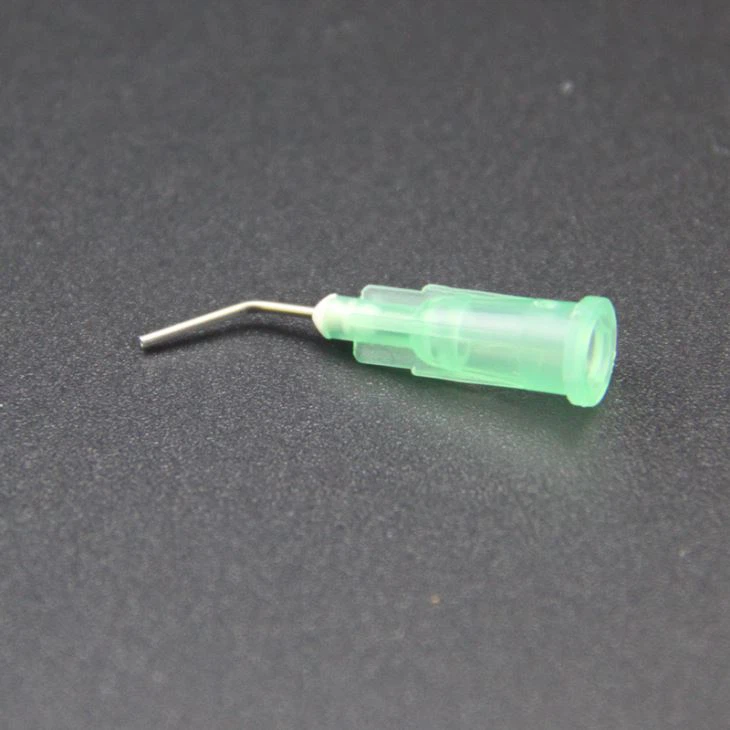
The gradations are usually clear and easy to read, even in low - light dental environments. This feature is especially useful when using a Side Vented Needle, which may require precise placement to achieve the desired flow of the irrigation solution or anesthetic agent. By referring to the gradations, the dentist can make more informed decisions during the procedure, enhancing both safety and efficacy.
5. Luer Lock or Slip - Tip Design
The connection between the needle and the syringe is also a safety - related feature. Most dental needles use either a Luer lock or a slip - tip design. A Luer lock design provides a secure and tight connection between the needle and the syringe. This prevents the needle from accidentally detaching during a dental procedure, which could lead to a foreign object being left in the patient's mouth or cause an injury.
On the other hand, a slip - tip design is easier to attach and detach, but it still provides a reasonably secure connection. The choice between the two depends on the specific needs of the dental procedure. As a supplier, we offer both types to meet the diverse requirements of our customers.
6. Sterility Assurance
Sterility is of utmost importance when it comes to dental needles. All our dental needles are sterilized using advanced techniques such as gamma irradiation or ethylene oxide sterilization. This ensures that the needles are free from any bacteria, viruses, or other microorganisms that could cause infections in the patient.
The packaging of the needles is also designed to maintain sterility until the moment of use. It's usually sealed in a tamper - evident wrapper, so the dental staff can easily tell if the needle has been compromised. This is a vital safety feature as any contamination of the needle can lead to serious health complications for the patient.

Why These Safety Features Matter
All these safety features are not just nice - to - haves; they are essential for the well - being of both dental patients and the dental team. For patients, safe dental needles mean a reduced risk of pain, infection, and other complications during a dental procedure. They can have more confidence in the dental treatment they're receiving.
For dental professionals, safety features in needles reduce the risk of accidental needle sticks, which can be a significant occupational hazard. This, in turn, reduces the risk of transmitting blood - borne diseases such as hepatitis B, hepatitis C, and HIV.
Let's Connect for Your Dental Needle Needs
If you're a dental practice or a distributor looking for high - quality dental needles with top - notch safety features, we'd love to hear from you. We've got a wide range of dental needles, including Dental Anesthesia Needles, Dental Irrigation Needles, and Side Vented Needles. Our team is always ready to assist you in finding the right products for your specific requirements. Reach out to us to start a discussion about your dental needle procurement.
References
- Dental Needle Safety Standards. American Dental Association.
- Guidelines for Preventing Needlestick Injuries in Dental Settings. Centers for Disease Control and Prevention.
- Materials and Design Considerations for Dental Needles. Journal of Dental Research.


