


Hey there! As a hypodermic needle supplier, I've got a pretty good grasp on how these little medical tools work inside the body. So, let's dive right into the movement mechanism of a hypodermic needle in the body.
First off, what's a hypodermic needle? It's a thin, hollow tube designed to pierce the skin and deliver or withdraw fluids. We offer a wide range of hypodermic needles, like Sterile Needles, Spinal Needle, and Syringe Hypodermic Needle. Each type has its own unique features and uses, but they all share the basic function of interacting with the body's tissues.
When a hypodermic needle is inserted into the body, it has to pass through several layers of tissue. The first layer is the epidermis, which is the outermost layer of the skin. It's made up of dead skin cells and acts as a protective barrier. The needle has to be sharp enough to break through this layer without causing too much damage. Once it's through the epidermis, it enters the dermis. The dermis contains blood vessels, nerves, and connective tissue. This is where you might feel a little pain when the needle goes in, because the nerves are being stimulated.
After passing through the dermis, the needle reaches the subcutaneous tissue. This layer is mainly made up of fat cells and connective tissue. It provides insulation and cushioning for the body. Depending on the purpose of the injection, the needle may stop in the subcutaneous tissue or continue deeper into the muscle.
For subcutaneous injections, the needle is usually inserted at a 45 - degree angle. This allows the medication to be deposited just below the skin. The subcutaneous tissue has a relatively slow blood supply, so the medication is absorbed gradually into the bloodstream. This is great for medications that need to be released slowly over time, like insulin.
On the other hand, intramuscular injections require the needle to be inserted at a 90 - degree angle directly into the muscle. Muscles have a rich blood supply, so medications injected into the muscle are absorbed more quickly. This is often used for vaccines or medications that need to take effect rapidly.
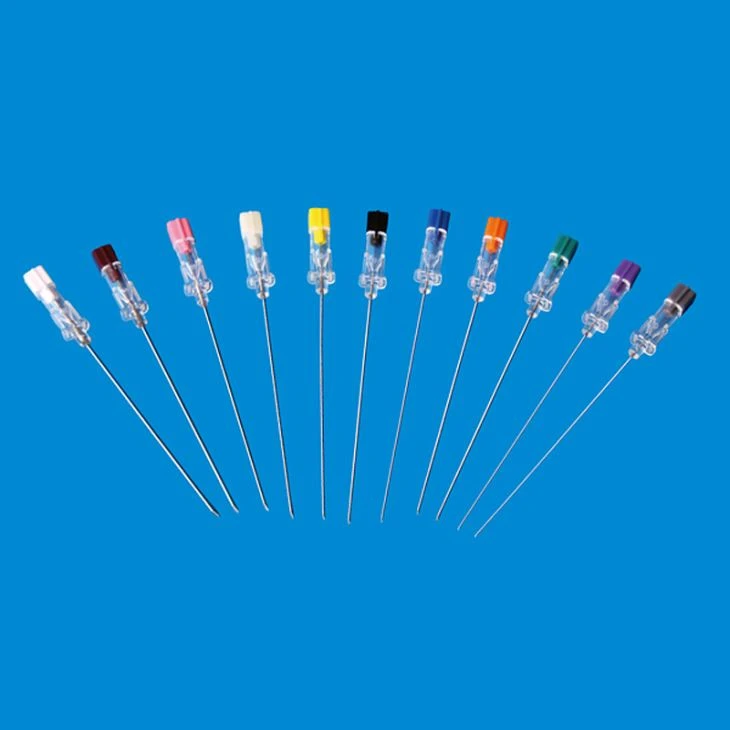

Now, let's talk about the movement of the needle itself. When a healthcare provider inserts a needle, they use a steady, controlled motion. They need to be careful not to insert the needle too deeply or too quickly, as this could cause damage to underlying organs or tissues. Once the needle is in place, the plunger on the syringe is pushed to deliver the medication. The pressure from the plunger forces the fluid through the hollow needle and into the body.
The size of the needle also plays an important role in its movement and function. Needles come in different gauges, which refers to the diameter of the needle. A smaller gauge number means a larger diameter. For example, a 16 - gauge needle is thicker than a 25 - gauge needle. Thicker needles are often used for drawing blood or delivering thick medications, while thinner needles are used for more delicate procedures or when less pain is desired.
Another factor that affects the movement of the needle is the bevel. The bevel is the slanted tip of the needle. A sharp bevel helps the needle to penetrate the skin more easily. There are different types of bevels, such as short bevels and long bevels. Short bevels are often used for intramuscular injections, as they allow for more precise placement, while long bevels are used in some specialized procedures.
When the needle is removed from the body, it has to be done carefully to minimize bleeding and tissue damage. The healthcare provider will usually apply gentle pressure to the injection site to stop any bleeding. After that, the site may be covered with a small bandage.
In addition to delivering medications, hypodermic needles can also be used for withdrawing fluids from the body. For example, when taking a blood sample, the needle is inserted into a vein. The vein has a higher pressure than the syringe, so when the plunger is pulled back, the blood is drawn into the syringe through the needle.
As a hypodermic needle supplier, we understand the importance of quality and safety. Our needles are designed to be as sharp and smooth as possible to minimize pain and tissue damage. We also ensure that our needles are sterile to prevent infections.
If you're in the market for hypodermic needles, whether it's for a medical facility, a research lab, or any other application, we'd love to talk to you. We can provide you with high - quality needles that meet your specific needs. Contact us to start a discussion about your requirements and let's work together to find the best solution for you.
References
- Guyton and Hall Textbook of Medical Physiology
- Principles of Anatomy and Physiology, Tortora and Derrickson


