


Absorbable sutures have revolutionized the field of surgery, offering numerous advantages over traditional non - absorbable sutures. As a leading supplier of absorbable sutures, I am often asked about how these remarkable medical devices interact with body tissues. In this blog post, I will delve into the science behind the interaction of absorbable sutures with body tissues, exploring the mechanisms, factors influencing the process, and the implications for surgical procedures.
Mechanisms of Interaction
The interaction between absorbable sutures and body tissues begins as soon as the suture is placed within the body. Absorbable sutures are designed to gradually break down over time, eliminating the need for suture removal. This process involves two main mechanisms: hydrolysis and enzymatic degradation.
Hydrolysis
Hydrolysis is a chemical reaction in which water molecules break the chemical bonds within the suture material. Many synthetic absorbable sutures, such as polyglycolic acid (PGA) and polylactic acid (PLA) based sutures, undergo hydrolysis. When these sutures come into contact with the body's extracellular fluid, water molecules penetrate the suture material. The ester bonds in PGA and PLA are susceptible to hydrolysis, causing the long polymer chains to break into smaller fragments.
As the polymer chains break down, the suture loses its mechanical strength. The rate of hydrolysis is influenced by several factors, including the chemical composition of the suture, the pH of the surrounding tissue, and the temperature. For example, a more acidic or alkaline environment can accelerate the hydrolysis process. The smaller fragments produced by hydrolysis are then further metabolized by the body's cells or excreted through normal physiological processes.
Enzymatic Degradation
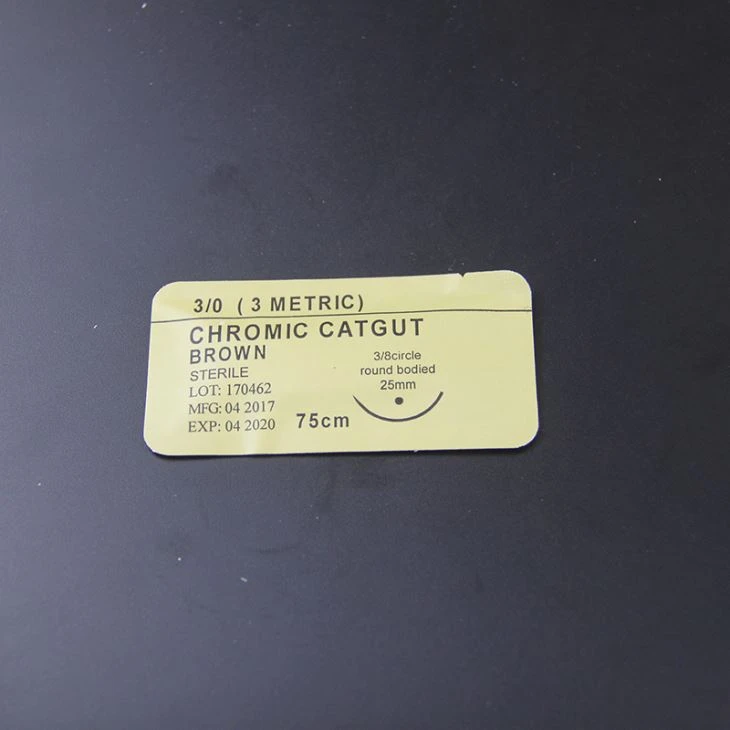
Enzymatic degradation is another important mechanism for the absorption of some absorbable sutures, especially those made from natural materials. Chromic Suture and Chromic Catgut are examples of natural absorbable sutures that rely on enzymatic degradation. These sutures are derived from collagen, a protein found in connective tissues.
In the body, enzymes such as collagenases are responsible for breaking down the collagen in the suture. Collagenases cleave the peptide bonds in the collagen molecules, gradually reducing the suture's mass and strength. The activity of collagenases is regulated by the body's immune system and the local tissue environment. Inflammatory cells at the surgical site can release cytokines that stimulate the production and activity of collagenases, thereby promoting the degradation of the suture.
Tissue Response to Absorbable Sutures
When an absorbable suture is placed in the body, the surrounding tissues mount an immune response. This response is a normal part of the body's defense mechanism against foreign materials. The initial response is characterized by inflammation, which is a complex biological process involving the recruitment of immune cells, such as neutrophils and macrophages, to the surgical site.
Inflammatory Phase
During the first few days after suture placement, neutrophils are the first immune cells to arrive at the site. Neutrophils are phagocytic cells that can engulf and destroy bacteria and other foreign particles. They also release reactive oxygen species and proteolytic enzymes, which can contribute to the breakdown of the suture material.
Macrophages arrive at the site a few days later. Macrophages play a crucial role in the clearance of the suture fragments and the initiation of tissue repair. They phagocytose the degraded suture fragments and secrete cytokines and growth factors that promote the proliferation of fibroblasts and the synthesis of new extracellular matrix.
Tissue Repair and Remodeling
As the suture degrades, the body begins the process of tissue repair and remodeling. Fibroblasts, which are cells responsible for producing collagen and other extracellular matrix components, migrate to the surgical site. They lay down a new matrix of collagen fibers, which helps to strengthen the wound and restore the normal tissue structure.

Over time, the new collagen matrix undergoes remodeling, where the disorganized collagen fibers are re - arranged into a more organized and stronger structure. The rate of tissue repair and remodeling is influenced by the type of suture used, the location of the wound, and the overall health of the patient.
Factors Influencing the Interaction
Several factors can influence how absorbable sutures interact with body tissues. Understanding these factors is crucial for surgeons to select the most appropriate suture for a particular surgical procedure.
Suture Material
The choice of suture material has a significant impact on the interaction with body tissues. Synthetic absorbable sutures, such as polyglactin 910 and polydioxanone, offer predictable degradation profiles and excellent mechanical properties. They are less likely to cause an intense inflammatory response compared to natural absorbable sutures.
Natural absorbable sutures, on the other hand, are derived from biological sources and may be more prone to causing an immune reaction. However, they can be advantageous in certain situations, such as in areas where rapid suture absorption is required.
Suture Size
The size of the suture also affects its interaction with body tissues. Smaller sutures generally cause less tissue trauma and inflammation compared to larger sutures. However, smaller sutures may have lower tensile strength, which may not be suitable for applications where high - strength closure is required.
Wound Location
The location of the wound can influence the rate of suture absorption and tissue response. Wounds in highly vascularized areas, such as the face and scalp, tend to have a faster blood supply, which can accelerate the delivery of immune cells and nutrients to the site. This can result in a more rapid degradation of the suture and a faster tissue repair process.
In contrast, wounds in areas with poor blood supply, such as the lower extremities, may have a slower rate of suture absorption and tissue repair. Additionally, the pH and oxygen tension in different tissue locations can also affect the hydrolysis and enzymatic degradation of the suture.
Patient - related Factors
Patient - related factors, such as age, nutritional status, and underlying medical conditions, can also impact the interaction between absorbable sutures and body tissues. Older patients may have a slower tissue repair process and a reduced immune response, which can affect the rate of suture absorption.
Patients with poor nutritional status, especially those with deficiencies in vitamins and minerals, may have impaired collagen synthesis and tissue healing. Underlying medical conditions, such as diabetes and immunosuppression, can also increase the risk of infection and delay the wound healing process.
Implications for Surgical Procedures
The interaction between absorbable sutures and body tissues has important implications for surgical procedures. Surgeons need to consider the properties of the suture and the characteristics of the wound when selecting the appropriate suture.
For example, in procedures where rapid wound healing is desired, such as in pediatric surgery or in areas with high tissue mobility, a suture with a fast absorption rate may be preferred. Dissolvable Sutures are often used in these cases to minimize the risk of suture - related complications and to allow for early mobilization of the patient.
In procedures where long - term wound support is required, such as in abdominal wall repairs or orthopedic surgeries, a suture with a slower absorption rate and higher tensile strength may be more appropriate. This ensures that the suture maintains its mechanical integrity until the wound has fully healed.
Conclusion
The interaction between absorbable sutures and body tissues is a complex and dynamic process that involves hydrolysis, enzymatic degradation, and a coordinated immune response. As a supplier of absorbable sutures, we are committed to providing high - quality products that are designed to optimize the interaction with body tissues and promote successful surgical outcomes.
If you are a surgeon or a medical professional interested in learning more about our range of absorbable sutures or would like to discuss potential procurement opportunities, please feel free to reach out to us. We are eager to engage in meaningful discussions and provide you with the best solutions for your surgical needs.
References
- Ratner, B. D., Hoffman, A. S., Schoen, F. J., & Lemons, J. E. (Eds.). (2004). Biomaterials science: An introduction to materials in medicine. Elsevier.
- Williams, D. F. (1981). Biocompatibility of clinical materials. CRC Press.
- Trantolo, D. J., & Jacoby, W. A. (Eds.). (1993). Encyclopedia of biomedical engineering. John Wiley & Sons.


